Short notes by Norbert Balza on strategy, systems and growth for Philippine businesses, first published on LinkedIn.
· Healthcare · Video
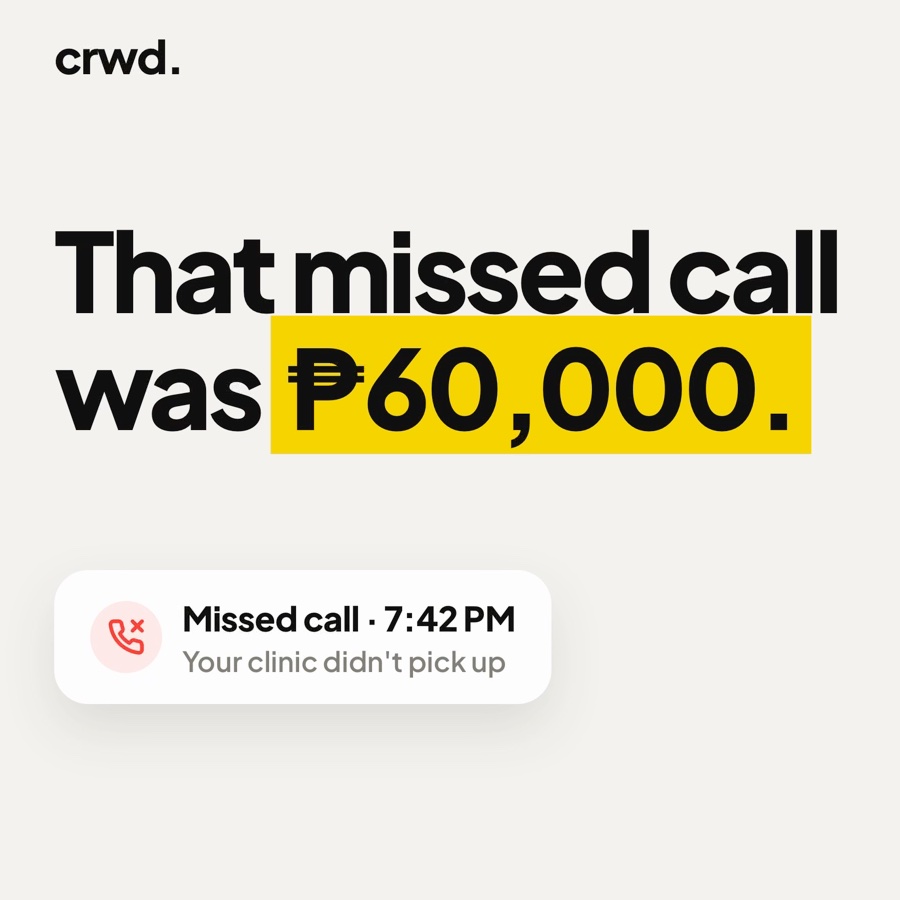
We’ve just added a new project in healthcare. 🦷
Watch the 45-second reel (sound on).
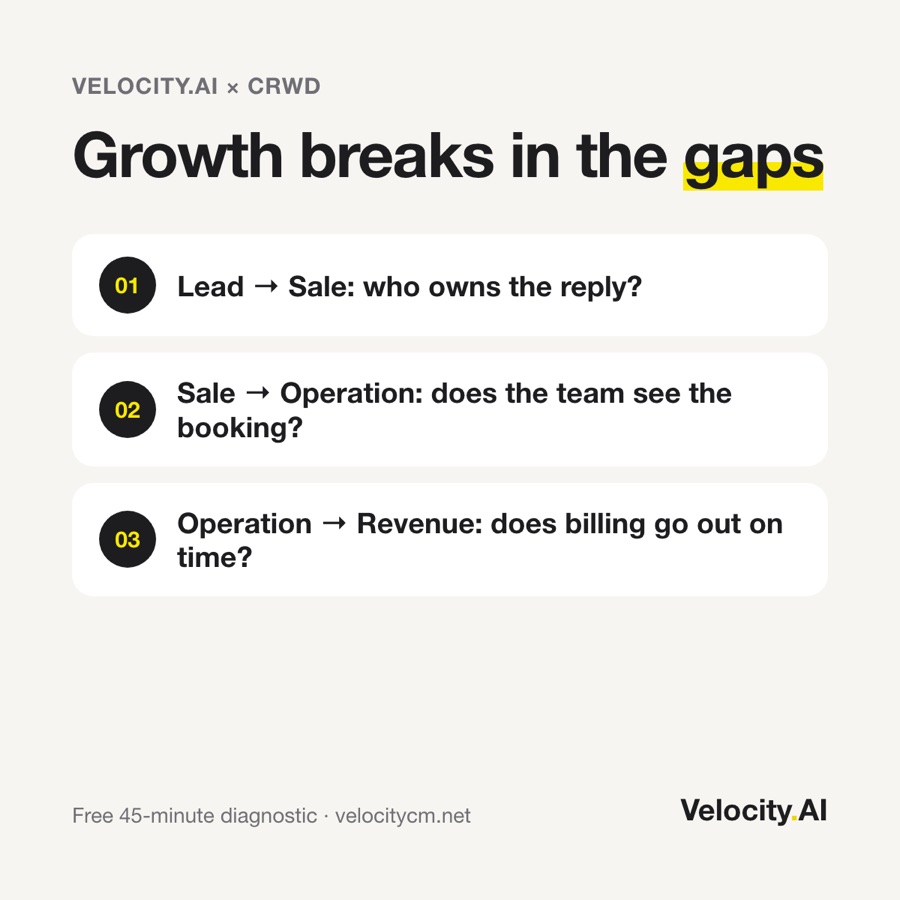
It started the way every CRWD engagement does: a free 30-minute Clarify Call, where we looked closely at how patients find the practice, how their calls and chats get answered, and where bookings slip away.
From that one conversation, the practice’s leadership took a closer look. Then the board made its decision: to partner with CRWD for an end-to-end patient acquisition platform, from getting found, to answering every call and chat, to booking, reminders and bringing patients back.
The best ERP is the one your team still uses six months after go-live.
I’ve led ERP rollouts. The software was rarely the problem. The problem was asking a growing business to bend to a system built for someone else. So people went back to a spreadsheet for stock, a group chat for approvals and a different file for every branch.
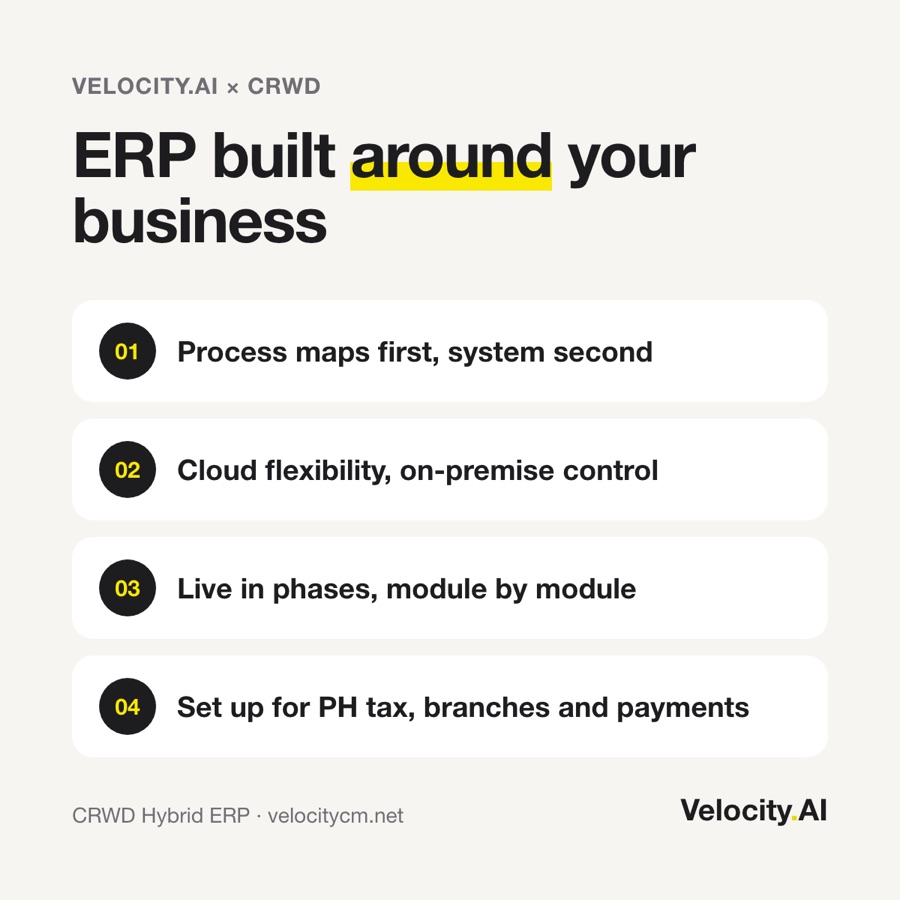
That’s why I like how CRWD Philippines approaches ERP:
Built around how you work. Process maps first, then the system.
Cloud flexibility, with on-premise control where your data needs it.
Delivered in phases, module by module, tested on your real data. No big-bang go-live.
Set up for the Philippines: multi-branch numbers, VAT and withholding tax configured with your accountant, GCash and Maya collections matched to invoices.
Technology should adapt to the business, not the other way around.
Owners: how many spreadsheets does it take to tell you what you made on one project?
Most systems are built to survive a bad week. The better ones learn from it.
Watch the 35-second explainer (no sound needed).
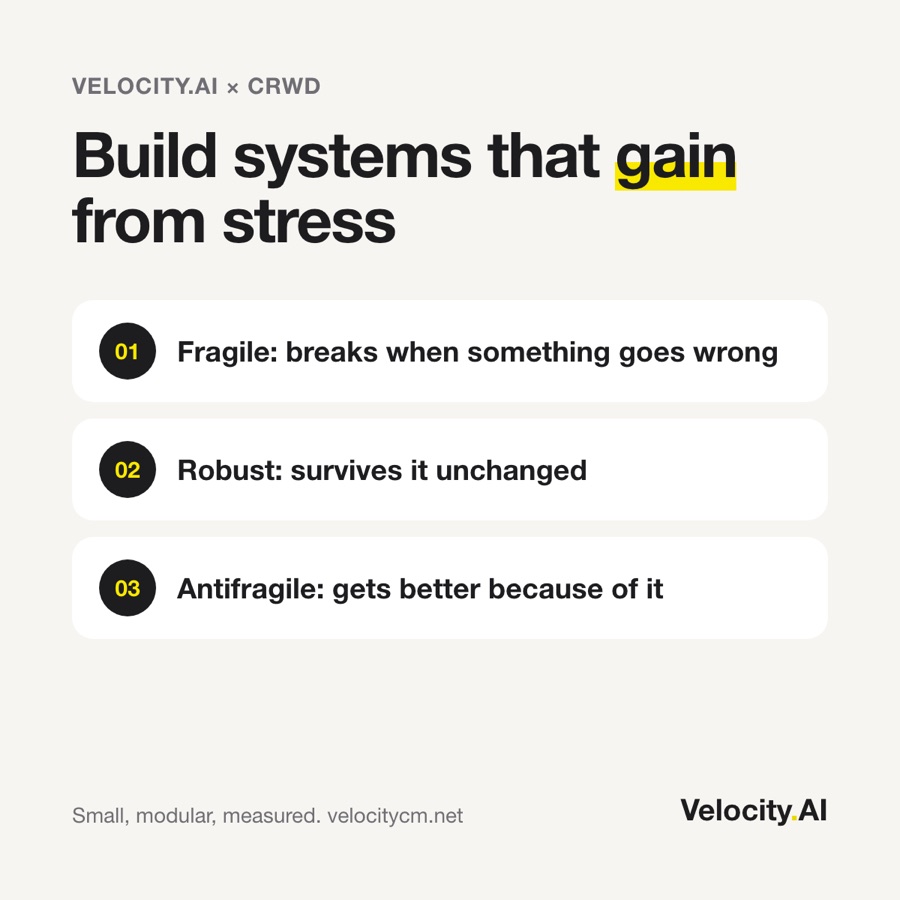
In Antifragile, Nassim Taleb sorts things three ways. Fragile breaks under stress. Robust resists it. Antifragile gets better because of it.
Big IT projects are often fragile. In an Oxford study of 1,471 IT projects, one in six ran about 200% over budget and almost 70% late. The researchers’ advice: break big projects into smaller ones.
I saw the same in ERP rollouts. So with CRWD we build differently:
Smaller and modular. One workflow live in 30 days. If a piece fails, it fails alone.
Intelligence built in. Every system tracks its own numbers, like response time, missed enquiries and bookings, and flags what slipped. Each miss feeds a monthly improvement cycle, so the system gets better by design, not by luck.
The goal isn’t a system that never breaks. It’s one that gets stronger when something does.
When something broke in your business last month, did it make the system better or just busier?